






- About Us
- |
- Our Blogs
- |
- FAQ's
- |
- Contact Us
6 Signs It’s Time to Replace Your Horse Saddle
- Home
- /
- 6 Signs It’s Time to Replace Your Horse Saddle
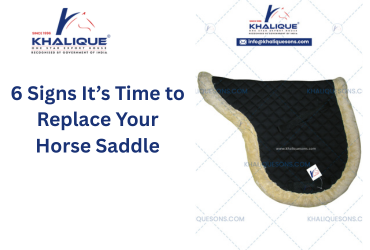
A horse saddle is more than an item of equipment; it is a crucial element that ensures comfort for both the horse and rider. Over time, the force of wear and tear can contribute to weakening the saddle's function, and if left unaddressed, could lead to discomfort, pain, or even injury. Understanding what to be aware of when your saddle needs replacement is essential information for any horse rider. Khalique Sons International, with its specialization in horse saddle pad manufacturers, stresses the need to periodically check your saddle's condition.
Compressed or Uneven Padding
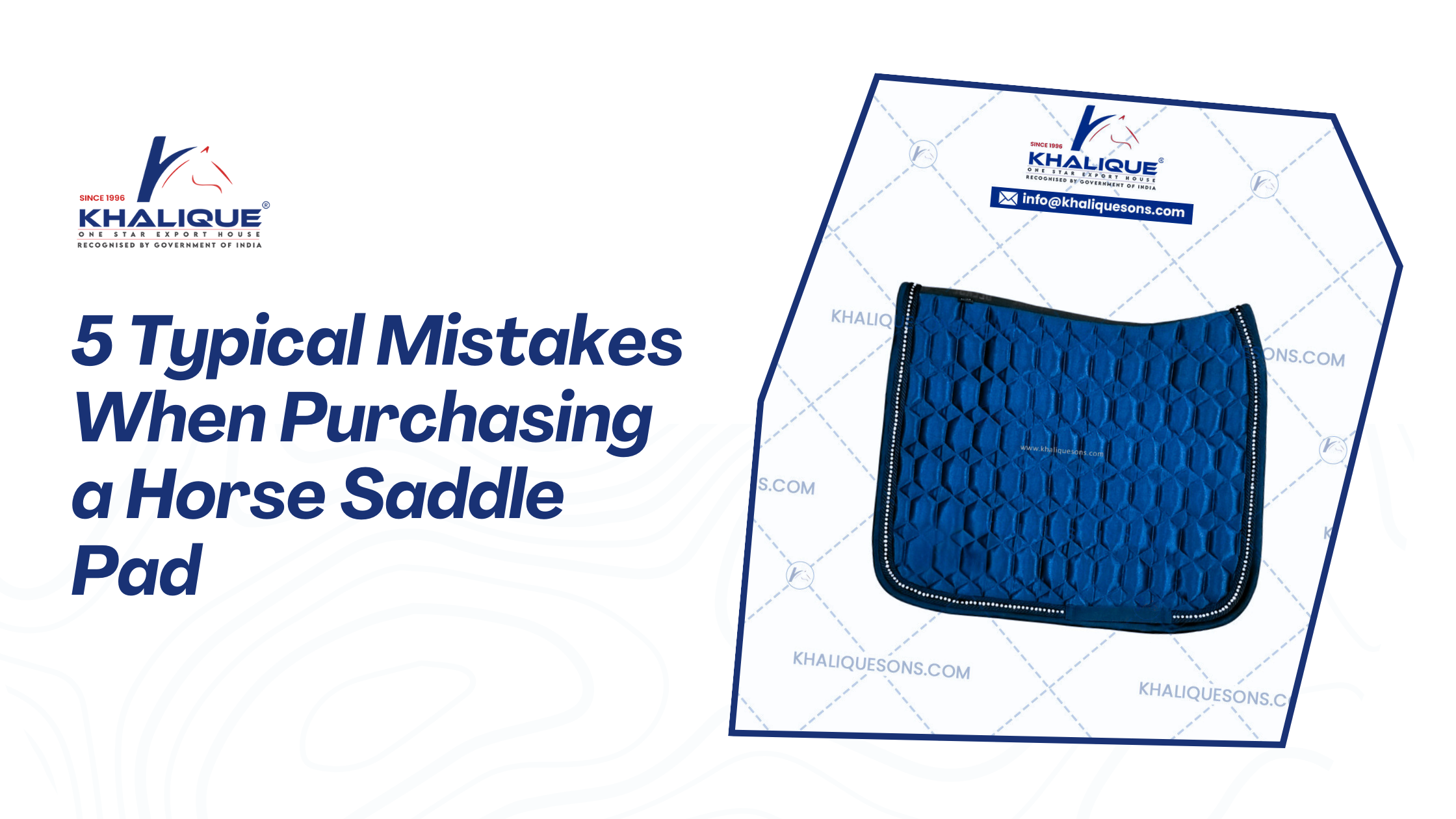
The first sign that your saddle needs to be replaced is compressed or uneven padding. The padding for both the rider and the horse comes from evenly distributing weight on the horse's back. If the padding starts sagging or gets compressed at certain places, it will become pressure points that can be uncomfortable for your horse. Riders will sense when a saddle is not sitting right or sense unevenness upon riding. Choosing good products from reputed horse saddle pad brands and replacing a saddle with compromised padding will ensure safety and comfort.
Visible Cracks or Damage in Leather
Leather is the most common material that is found in quality saddles. Leather, over a period of time, gets exposed to water, sun, and ordinary use and cracks or damages. Small cracks may seem insignificant, but they keep on widening with time and compromise the strength-providing structure of the saddle. A cracked saddle is not only ugly in appearance but also dangerous in safety aspects. The routine inspections detect these issues early on so that equestrians can replace the saddle before it becomes a danger. Dealing with reliable horse saddle pad manufacturers ensures your replacement saddle and pads are of good quality for durability and performance.
Loose or Broken Stitching
Stitching holds the various components of the saddle intact, and when stitchings become loose or break, the stability of the saddle gets compromised in general. Frayed stitching occurs on the seat, the panels, or the billets, and when left unattended, it can lead to the complete disintegration of the saddle during a ride. Frayed threads or the onset of separation of parts of the saddle are some of the indicators of faulty stitching. Detection is an indication it’s time to develop a replacement to ensure safety for both horse and rider.
Discomfort for the Horse
An incorrectly fitted saddle can cause discomfort, soreness, or possible injury to your horse. Indications of refusal to walk forward, bucking, or an unbalanced movement can indicate that pressure points are being created or movement is being restricted by the saddle. A knowledgeable saddle fitter can tell if a problem is fit related. In most cases, though, the fit problem is caused by an old saddle or a saddle that has been under stress for a long time. Using quality materials from well-known horse saddle pad manufacturers and replacing an ill-fitting saddle keeps your horse's back protected and results in smoother, more secure rides.
Rider Discomfort
Comfort matters to equestrians as well. An unsupported saddle may lead to rider tired, backache, or a wobbly ride. The rider may feel as if they are sliding ahead, have trouble maintaining balance, or develop pressure points that cause the longer rides to be unpleasant. Detecting them early is imperative. An accurately fitting saddle, which is produced by reputable horse saddle pad manufacturers, enhances control, stability, and overall ride for the rider and hence replacement proves to be a worthy investment.
Overuse on Stirrup Leathers or Girth Straps
Stirrup leathers and girth straps are subjected to heavy wear on rides. They stretch, crack, or deteriorate over time and become more prone to quick failure. Frequent inspections need to be conducted in these zones by the riders. Some components can be replaced individually, but extensive damage could indicate that the entire saddle is nearing the end of its useful life. Replacement at the opportune time prevents accidents and maintains overall functionality of the saddle.
Choosing the Right Replacement
After you have had to replace your saddle, it is best to be careful about reception of a new one. Khalique Sons International is a trusted name among manufacturers of saddle pads for horses.Their saddle pads research is aimed at durability and comfort for superior performance. It uses strong yet comfortable high-end materials and fabrics for you while riding as well as comfort for the saddle. An additional advantage of using a professional saddle pod manufacturer is their help in assisting you in transitioning from an older or faulty saddle to a new saddle that properly fits.
When you replace your old saddle with a new high-quality saddle, you are improving your comfort level as a rider and the health of your horse. A saddle made by trusted horse saddle pad manufacturers will provide durability, comfort, and safety to you and your horse. Routine maintenance—checking padding, stitching, leather quality, and straps—can enhance the life of a saddle, as well as knowing when to sell or replace it.
Ultimately, paying attention to signs that indicate that your saddle needs replacement is important for the safety and comfort of horse riding. Uneven padding, cracked leather, loose threads, and evidence of horse and rider discomfort are unmistakable signs. The wear on your stirrup leathers and Saddle straps also confirms a need to replace your saddle. When purchasing saddles from reputable firms such as Khalique Sons International, riders can take comfort in knowing they are purchasing saddles designed for performance, comfort, and durability. You want to avoid waiting for pain to appear, and you do not want to risk the welfare of your horse. Taking stock of your saddle today may save you considerable grief tomorrow and will -- in general -- improve the experience of your rides.